Maintenance
Part of A sustainable material brand checklist: twenty things to verify first
Reviewing sustainable material brands: strengths, gaps and a verdict
Six sustainable material brands are reviewed on their strengths, gaps, and which project types each one genuinely suits best across real builds.
What to take away
- Interface, Shaw Industries and Mohawk are the sustainable material brands with published material-health documentation per line; smaller mills often publish none.
- Cork, hemp and mycelium boards each win on a different metric, so match the board to the assembly.
- Ask for a batch tolerance in writing before ordering, and buy surplus from that same batch.
- A warranty claim turns on dated readings: moisture, temperature, humidity, and the adhesive named in the contract.
- Complaints about stuffiness get blamed on occupants until someone measures ventilation and indoor sources.
The brands, and what each is actually good for
Six sustainable material brands cover most low-carbon floors, walls and ceilings: Interface, Shaw Industries and Mohawk on carpet and hard surface, Amorim on cork, Hempitecture on hemp, and Ecovative on mycelium. Each is judged here on documentation, weak spots and fit.
Interface sells modular carpet tile with backing systems built around recycled content, and it publishes Environmental Product Declarations per product line. The strength is documentation you can hand a specifier. The gap is price: it competes for commercial contracts, not for a single residential room.
Suits offices, schools and multi-unit common areas. Its ReEntry program takes back used tile for recycling. Commercial carpet tile typically runs $3 to $7 per square foot installed.
Shaw Industries runs a large take-back and recycling program for carpet, which matters at replacement time rather than purchase time. Its EcoWorx backing carries a take-back guarantee.
Shaw residential carpet is widely stocked, so a discontinued style is easier to match later. Recycled-content claims vary by line, so check the product, not the brand. Typical installed cost runs $2 to $5 per square foot.
Mohawk covers both carpet and hard surface, and its hard-surface lines include recycled-content and bio-based options. SmartStrand carpet uses DuPont Sorona, a partly plant-based polymer, and Pergo laminate is a Mohawk brand.
One supplier can cover a whole floor. The gap is a broad catalog: it is easy to specify the wrong product for a wet room.
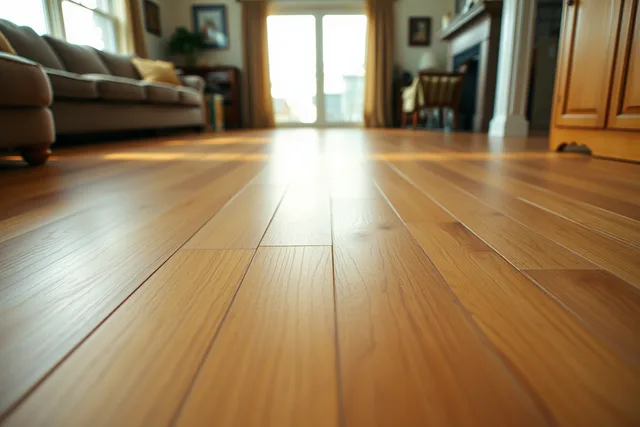
Amorim, the Portuguese cork group behind the Wicanders flooring brand, sells cork as flooring, underlayment and insulation board. Its strength is acoustics and warmth underfoot, which suits bedrooms and living areas.
The gap is moisture: cork in a basement or a bathroom needs an assembly designed for it, not a generic underlayment. Cork flooring typically costs $3 to $8 per square foot in material alone.
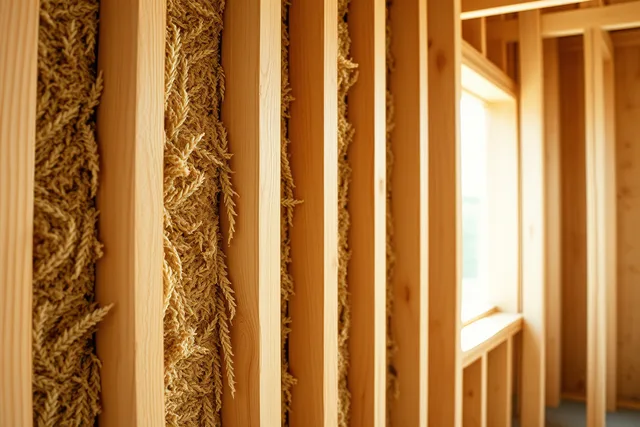
Hempitecture makes HempWool, a hemp-fiber batt sold in fixed thicknesses for walls, roofs and floors. Nature Fibres in Quebec and IndiNature in Scotland sell similar batts and loose fill.
Hemp handles moisture differently from mineral wool, so it suits walls where vapor can dry in both directions. Batts typically cost more than fiberglass, in the $1.50 to $3 per square foot range installed.
The gap is availability: fewer distributors, longer lead times, and fewer installers who have handled the material.
Ecovative grows mycelium boards on agricultural waste at its Green Island, New York plant. It sells them as insulation and acoustic panels under names such as MycoComposite and AirMycelium.
The strength is low embodied carbon and a board that can be shaped, which suits interior panels. The gap is that the category is young, so check the current datasheet for the R-value per inch rather than assuming.
Mogu in Italy makes mycelium acoustic tiles to order, and lead times run in weeks rather than days.
!image
How to read the claims without being misled
An EPD reports a range across a manufacturer's plants, not the number for the board in your hand. Ask for the product-specific declaration.
Formaldehyde limits are set federally under TSCA Title VI and in California under CARB Phase 2. Both apply to composite wood, and both are checkable on the label.
Recycled content is stated by weight or by volume, and the two numbers differ. Ask which one the claim uses, and get the answer on the datasheet.
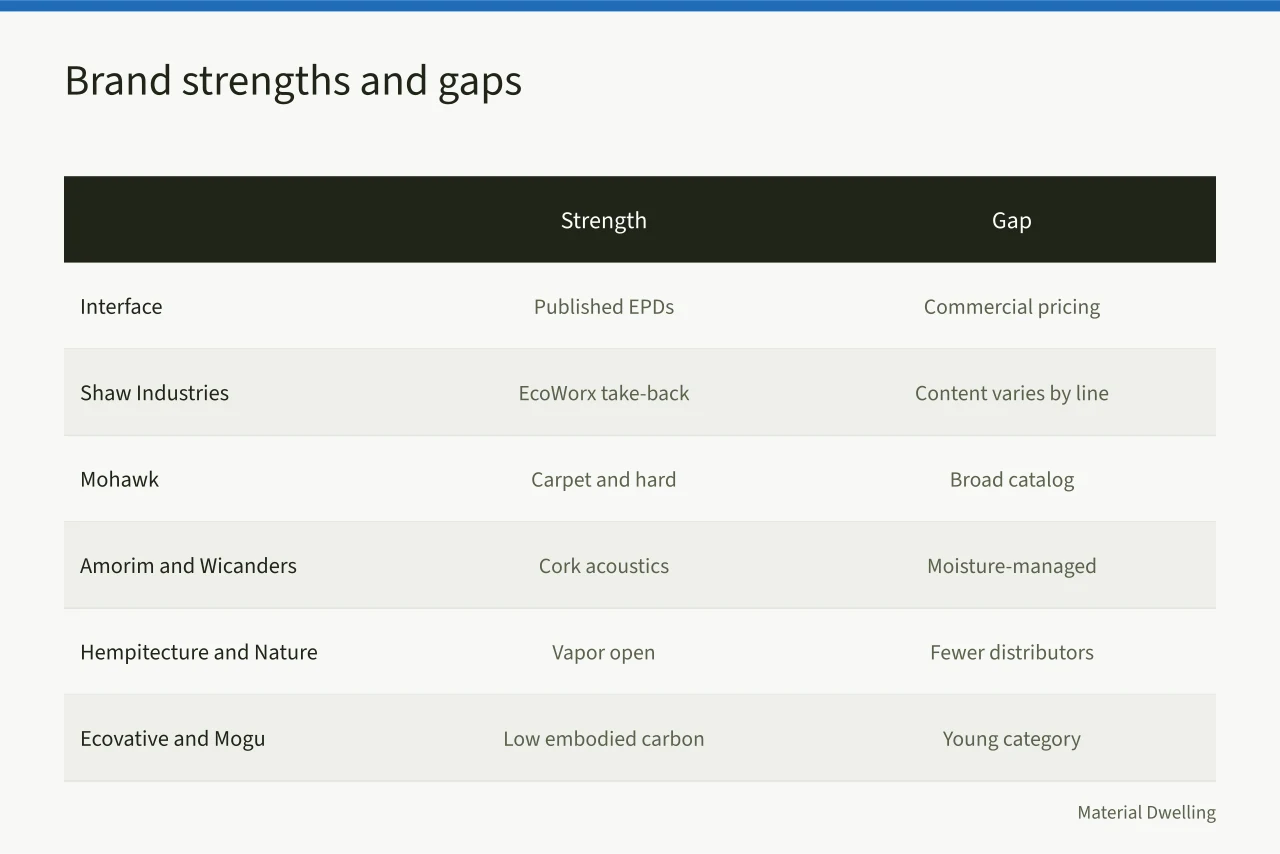
Where each brand falls short
| Brand | Strength | Gap |
|---|---|---|
| Interface | Published EPDs per product line | Commercial pricing |
| Shaw Industries | EcoWorx take-back guarantee | Recycled content varies by line |
| Mohawk | Carpet and hard surface together | Broad catalog invites mis-specification |
| Amorim and Wicanders | Cork acoustics, warm underfoot | Needs a moisture-managed assembly |
| Hempitecture and Nature Fibres | Vapor open in both directions | Fewer distributors and installers |
| Ecovative and Mogu | Low embodied carbon, shapeable | Young category, verify current datasheet |
The verdict
No single brand wins. Interface and Shaw Industries win on documentation and end-of-life handling, which matters most on commercial and multi-unit work. Mohawk wins on breadth for a whole-house floor.
Amorim, Hempitecture and Ecovative win on the assembly, not the label, and each needs a designer who has used it before.
Pick by the metric your project is judged on. If it is a green building rating, that is documentation. If it is a repair ten years out, that is surplus stock and a stocked line.
Common questions
How much surplus is enough?
Enough to repair the largest plausible damaged area. For a floor, that is more than a single plank or tile. Carpet tile is often ordered with 5 to 10 percent extra, plank floors about 10 percent.
Can I force a supplier to honor a warranty?
You can present evidence. Dated readings at installation are what change the conversation, so record moisture, temperature and humidity from day one. Commercial carpet warranties usually run 10 to 15 years; cork flooring warranties often run 10 years.
Is batch variation a valid reason to reject a delivery?
Only if it falls outside the tolerance you agreed before ordering. Without an agreed range, variation is a property of the material, not a defect.
Who investigates air quality complaints?
Start with ventilation rates and the sources the work introduced. EPA's fact sheet on sick building syndrome lists inadequate ventilation, indoor and outdoor contaminants, and biological growth as the usual causes, and its overview of indoor air quality science and technologies shows how those questions are approached formally. Persistent problems need a qualified assessor.
Screen suppliers first using our twenty checks for a material brand, and cross-check any physical symptom against the common interior material failures before accepting an explanation.