Features
Grout haze after sealing: why it returns and how to fix it for good
Why grout haze returns after sealing, how to strip it from cementitious, epoxy and urethane grout, and the cure windows and pH checks before you re-seal.
What to take away
- Haze that returns after sealing is usually residue the sealer locked in, or moisture still leaving a curing grout.
- Cementitious grout needs 48 to 72 hours of cure before sealing, and some makers ask for 7 to 10 days.
- Epoxy and urethane grouts normally need no sealer, so haze on them is a surface film you can strip.
- Sulfamic acid crystals lift cement haze; epoxy films need a non-acidic remover and a white pad.
- Re-seal only after a pH strip reads neutral and the joint is dry.
Why haze shows up after the sealer cures
Sealer is a film or a penetrating barrier. It cannot dissolve the powder already sitting on the tile face.
Three things bring haze back. First, the installer sealed before the haze was fully gone. Second, the grout was still curing and water moved upward, carrying salts that dried as a white bloom. Third, the sealer went on too thick and dried cloudy.
Cementitious grout is portland cement, sand, and pigment. Water in the mix drives efflorescence, the salt deposit that looks like haze but sits deeper in the joint. Grout also comes as epoxy and urethane, which cure by chemical reaction instead.
Solvent-based haze removers and solvent sealers release volatile organic compounds. The EPA ties those compounds to eye, nose, and throat irritation indoors.
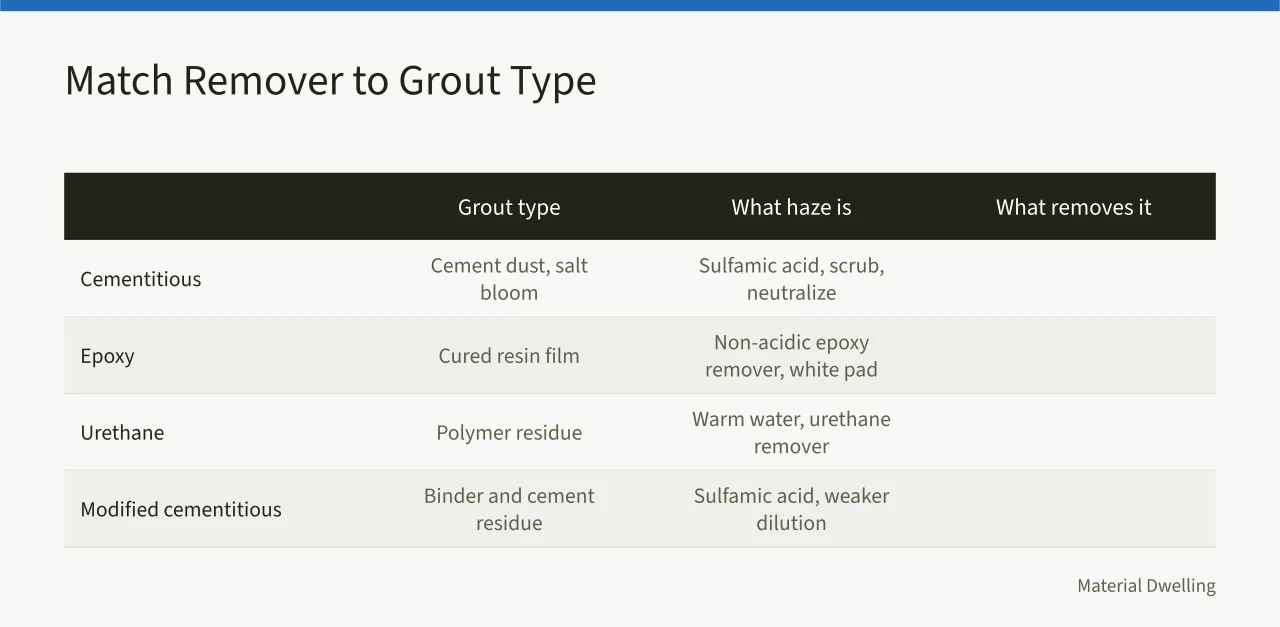
Match the removal method to the grout
| Grout type | What the haze is | What removes it |
|---|---|---|
| Cementitious | Cement dust and salt bloom | Sulfamic acid crystals, scrub, neutralize |
| Epoxy | Cured resin film | Non-acidic epoxy haze remover, white pad |
| Urethane | Polymer residue | Warm water first, then urethane haze remover |
| Modified cementitious | Binder and cement residue | Sulfamic acid at a weaker dilution |
Acid is not universal. Sulfamic acid can dull epoxy and urethane and etch marble or limestone. Match the product to the grout, and test on a hidden tile first.
A grout haze remover sold for cement grout often contains sulfamic or phosphoric acid. Read the label before you buy, because some products also carry solvents you do not need on epoxy. The practical detail is set out in Non-toxic grout sealer for tile which.
Step by step: strip, clean, neutralize, dry
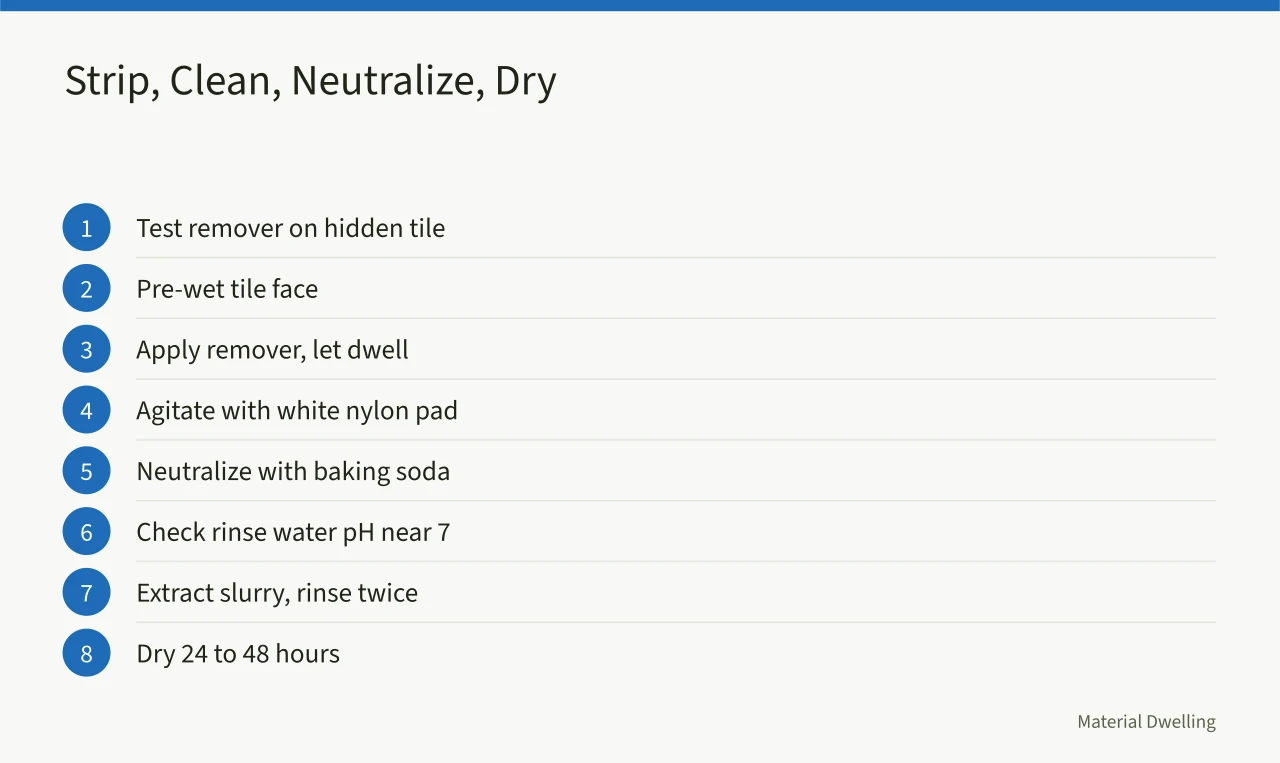
Strip, clean, neutralize, dry
- Test the remover on a spare tile or a hidden corner.
- Pre-wet the tile face so the product stays on the surface instead of soaking into the joint.
- Apply the remover with a plastic sprayer or sponge, and let it dwell for the time on the label.
- Agitate with a white nylon pad or a stiff nylon brush. Never use steel wool on glazed tile.
- Neutralize with baking soda, about one cup per gallon of water, or a commercial neutralizer.
- Check the rinse water with pH strips until it reads near 7.
- Extract the slurry with a wet/dry vacuum, then rinse twice with clean water.
- Dry for 24 to 48 hours with a fan and, if you have one, a dehumidifier.
Example: a 4 by 4 foot shower floor
A porcelain hex mosaic on a shower floor with sanded cementitious grout was sealed 36 hours after grouting. By the next morning the joint lines had gone white again.
The fix was a full strip with sulfamic acid crystals, a pH check, 48 hours of drying with a fan, then two thin coats of a water-based sealer.
The second seal held because the haze was gone and the grout had cured, not because the sealer was different.
Re-sealing without trapping moisture
Follow the cure window on the bag and the sealer label. Cementitious grout often needs 48 to 72 hours, and some makers ask for 7 to 10 days before a wet area sees sealer.
Choose a water-based sealer, and check the EPA Safer Choice list when odor and indoor air matter to the household.
Two thin coats beat one heavy coat. Wipe the excess before it dries, usually within 5 to 10 minutes of application.
Wait 24 hours between coats on most water-based sealers, and keep foot traffic off the floor until the film is dry to the touch.
If the haze came back after a recent seal, read how to avoid a US kitchen redo before you strip anything.
Prevention: a pre-seal checklist
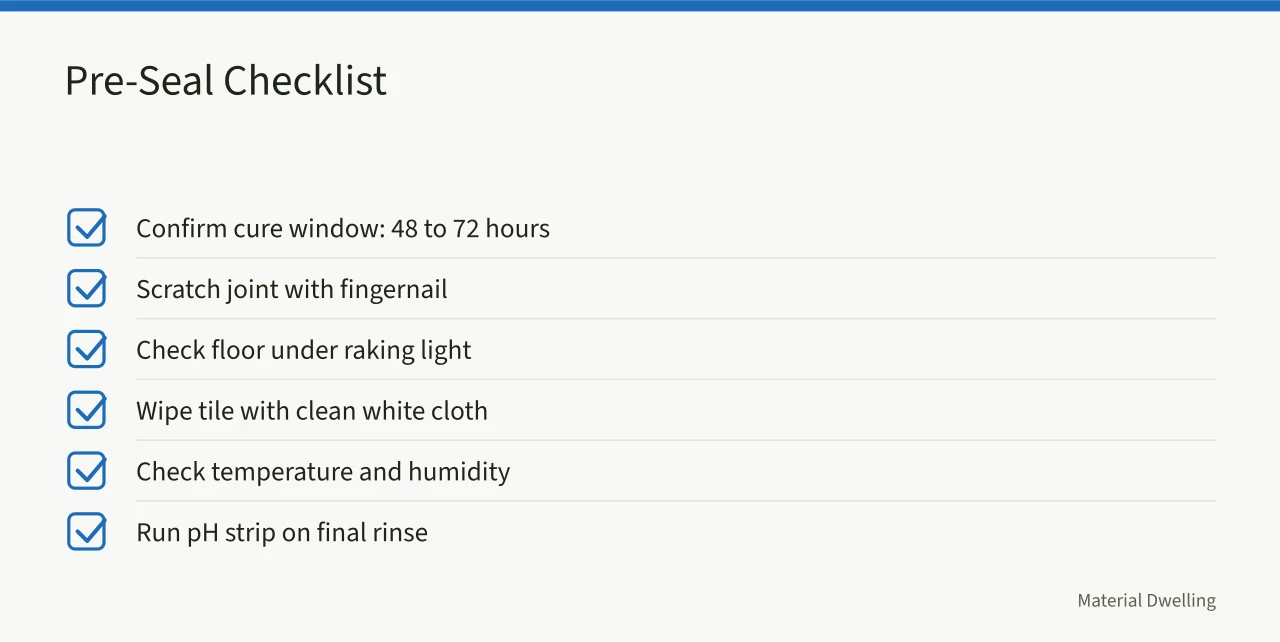
- Confirm the cure window48 to 72 hours for cementitious grout, longer if the label says so.
- Scratch the joint with a fingernail. If it crumbles, wait.
- Look at the floor under a raking light. Any white film means clean again first.
- Wipe a tile with a clean white cloth. A gray or white streak means residue.
- Check temperature and humidity against the sealer label.
- Run a pH strip on the final rinse water before you open the sealer.
Common questions
Why did my grout go white again after sealing?
Sealer traps leftover dust or efflorescence under the film, or moisture was still moving through the joint. Strip the sealer, clean the grout, and dry it fully before re-sealing.
Can I seal over grout haze?
No. Sealer over haze locks in the film and makes later removal harder. Remove the haze first, then seal.
Does vinegar remove grout haze?
Vinegar is a weak acid and may lift a light salt bloom. It will not touch epoxy film and can leave residue on cement grout. Use a product made for the grout type.
How do I know the grout is dry enough to seal?
Wait the full cure window, then check that the joint looks uniformly matte and a paper towel pressed against it stays dry. A moisture meter helps on slabs.