Guides
Natural insulation work inside a home: the stop-or-go survey checks
Natural insulation work inside a home starts with a survey: stop-or-go checks for vermiculite, the EPA lead rule, moisture, combustion and ventilation.
What to take away
- Some findings in an attic mean stop, not start. Suspected vermiculite is the clearest case.
- Tightening a house changes its ventilation and its combustion safety at the same time.
- Air sealing and moisture checks come before any material is installed.
- Pre-1978 painted surfaces bring EPA's Renovation, Repair and Painting (RRP) Rule into play, and a certified firm is required for that work.
Four survey questions that decide stop or go
A survey answers four questions. Where is the existing insulation, and what is it? Where is the air barrier, if there is one? Where does moisture enter or accumulate? And what combustion appliances are in the house?
Look at the attic, the rim joist, the crawl space and any knee walls. Note what is already there, its depth, its condition, and whether it is dry. An installer who checks these on site before quoting is working from diagnostics, not guesswork.
Also note bathroom fans that vent into the attic, recessed lights that leak air, and any staining on the underside of the roof deck. Each of these changes what is safe to do next, so each one goes into the stop-or-go table at the end.
Suspected vermiculite: the homeowner's job is to stop
Older attics can contain loose fill vermiculite, and suspected vermiculite is a reason to stop work. EPA's page Protect Your Family from asbestos-contaminated vermiculite insulation explains why.
A mine near Libby, Montana supplied over 70 percent of the vermiculite sold in the United States from 1919 to 1990. That deposit was contaminated with asbestos, and the material was often sold under the Zonolite brand name.
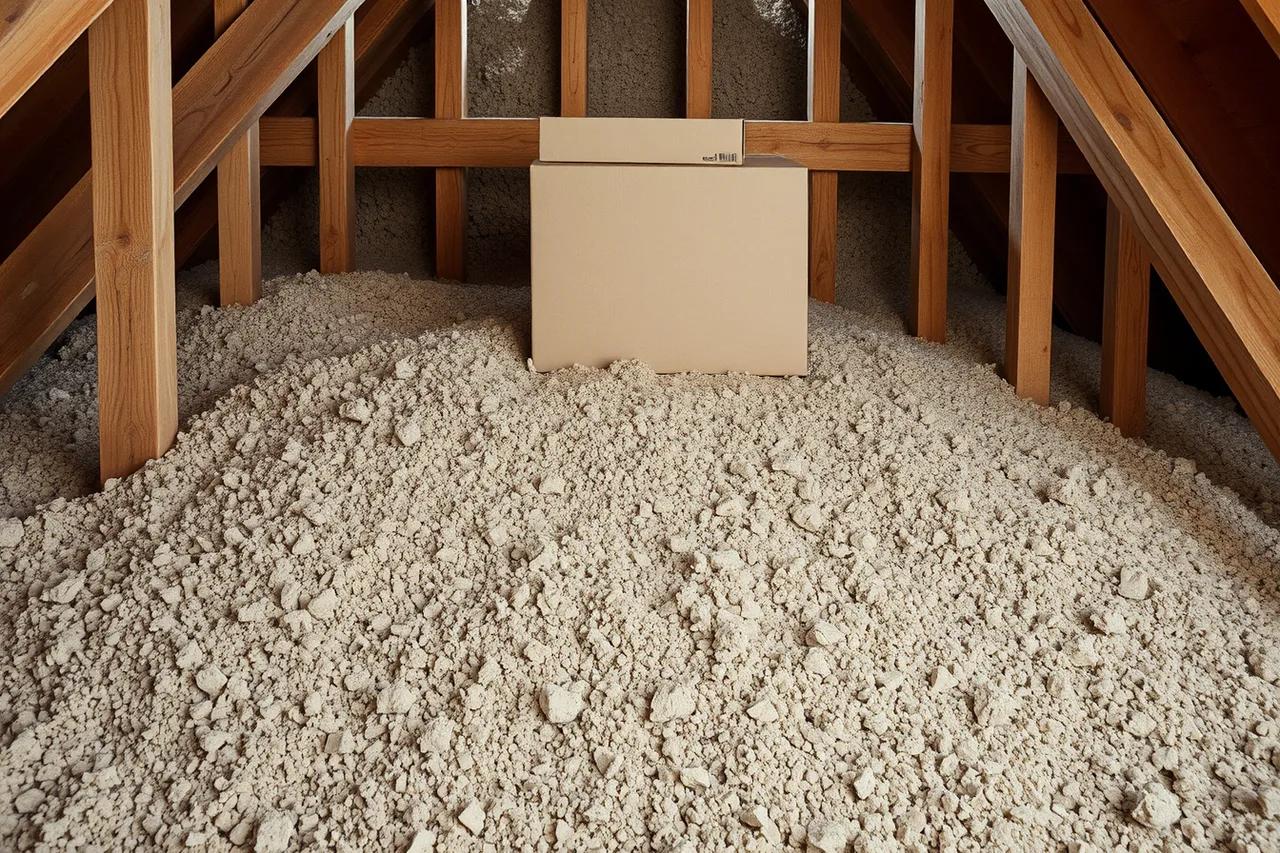
The practical instruction is not to disturb suspected vermiculite and to get professional advice. That means no vacuuming, no moving boxes stored on top of it, and no walking through the attic to look at something else.
EPA also says not to attempt to remove the insulation yourself. If you plan to remodel or renovate in a way that would disturb the vermiculite in your attic or walls, EPA says to hire a professional asbestos contractor so the material is safely handled or removed.
Lead paint in pre-1978 housing: the RRP Rule
Any work that disturbs painted surfaces in pre-1978 housing brings EPA's Lead Renovation, Repair and Painting (RRP) Rule into play, and a certified firm is required for that work. Insulation jobs are not exempt just because insulation is the main task.
Under the rule, firms performing renovation, repair and painting projects that disturb lead-based paint in homes built before 1978 must be EPA- or state-certified. They must also use certified renovators who follow specific work practices to prevent lead contamination.
Check the firm before the survey visit ends, not after the first cut. EPA's searchable database helps you locate lead-safe certified firms near you. A certificate you have seen and noted is a check; a verbal assurance is not.
A job that looks like pure insulation can still disturb painted surfaces, so raise the build year when you book. The firm can then plan the work around the rules instead of discovering them mid-job.
Air seal first, then insulate
Air movement carries far more heat and moisture than conduction through a material does, which is why sealing comes first.
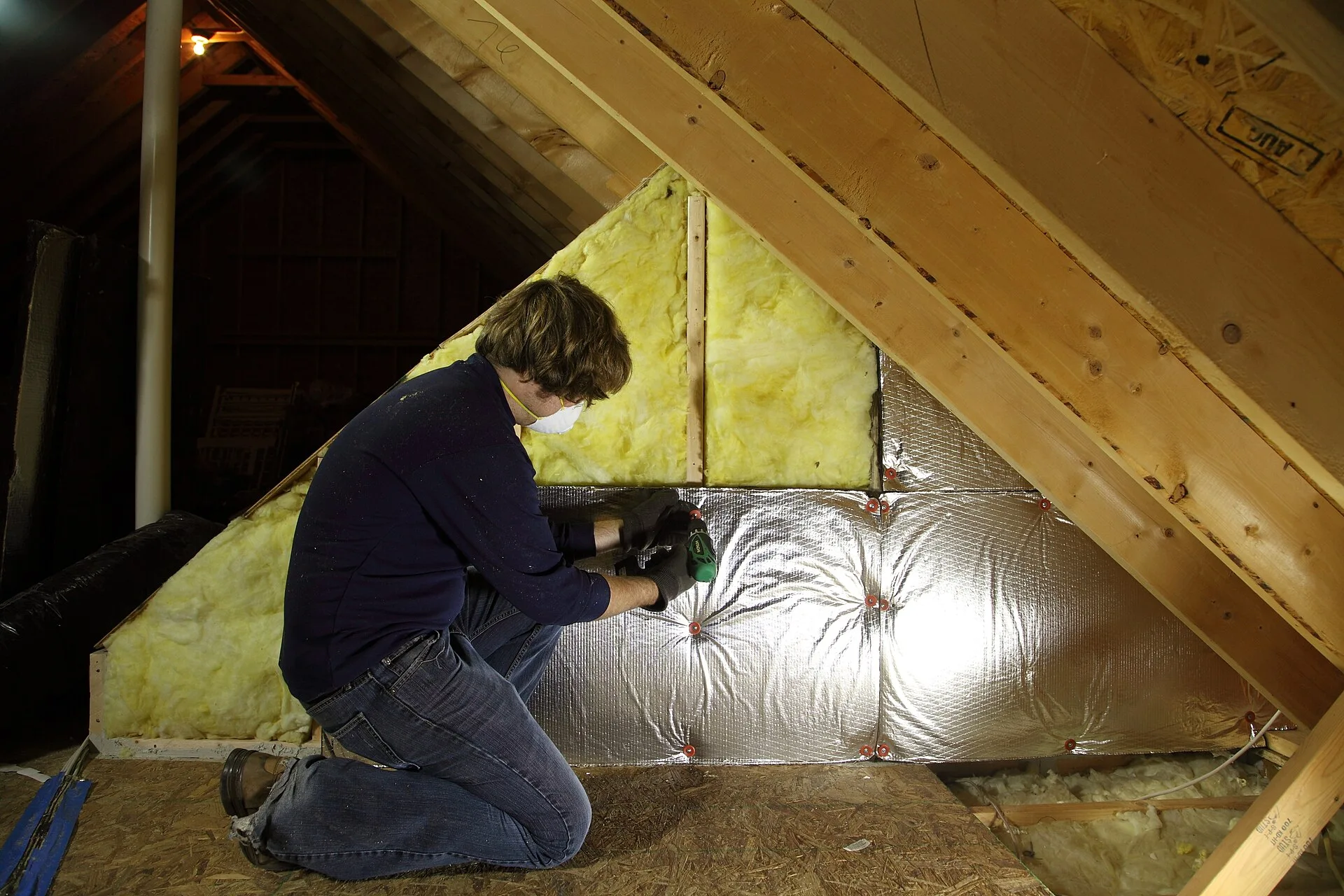
The sequence in an attic runs: seal top plates, penetrations, chases, recessed lights and the attic hatch, correct any fans venting into the space, install baffles at the eaves, and only then add insulation.
Each material asks something different of the installer. The table sets out form and handling for the common natural options.
Form
- Cellulose
- Loose fill or dense pack
- Wood fiber
- Batt or board
- Sheep wool
- Batt
- Hemp and flax
- Batt
- Cork board
- Rigid board
Notes
- Cellulose
- Recycled paper base, needs correct density
- Wood fiber
- Handles moisture cycling well
- Sheep wool
- Tolerates moisture, needs pest treatment
- Hemp and flax
- Similar handling to wool, dust during cutting
- Cork board
- Rigid, used for continuous exterior layers
All of these are installed to a target depth or density. Under-filled cavities and compressed batts are the two most common installation faults, and both are invisible once covered. The moisture side also shifts with hot-humid or cold-dry climates.
Ventilation and combustion safety
A tighter house exchanges less air with the outside, which means mechanical ventilation stops being optional. EPA's fact sheet on ventilation and air quality in homes sets out why dilution matters and what happens when air exchange falls.
Ask the installer how any new fan will be sized before the house is tightened. Where the scope justifies it, a blower door test before and after the work shows how much tighter the house became.
Combustion appliances need the same attention. Furnaces, water heaters, fireplaces and gas ranges all need adequate air and correct venting, and tightening the envelope around them without checking is genuinely dangerous. Ask how the installer will check them once air sealing is done.
Ask for the tests by name. DOE's Building America test methods list tests that may be part of a combustion safety protocol: combustion appliance zone (CAZ) worst case depressurization, vent spillage under worst case and normal conditions, draft pressure, and CO production. Ask which ones the installer will run and keep the readings.
A stop-or-go table for the attic visit
| Finding | Action | Reason |
|---|---|---|
| Suspected vermiculite | Stop, do not disturb, hire a professional asbestos contractor if work would disturb it | Possible asbestos contamination, per EPA |
| Painted surfaces, pre-1978 | Hire an EPA- or state-certified firm | EPA's RRP Rule applies to the work |
| Fan venting into the attic | Correct it before insulating | Part of the air sealing sequence |
| Staining under the roof deck | Note it and find the source | Moisture entry or build-up |
| Furnace, water heater, gas range | Ask for CAZ depressurization, spillage, draft and CO tests | Tightening can make them unsafe |
Where the survey is clear, the job moves on to installation and verification, phases a realistic project timeline has to leave room for. The same check-first logic runs through sustainable interiors in the U.S. generally, and the survey sits beside interior material choices in the planning.
Common questions
Can I add insulation over existing material?
Does natural insulation perform worse than foam?
Do I need a vapor barrier?
How do I know the work was done properly?
In this guide
- Small-room natural insulation: where to spend the inchesNatural insulation ideas for small rooms and apartments: which natural materials fit thin spaces, where each inch pays off, and the safety checks to do first.
- The regrets that follow natural insulation jobs without air sealingThe regrets that follow natural insulation work: settled cellulose, trapped moisture, skipped air sealing, pest damage and ventilation nobody added back.
- Natural insulation timeline: Retrofit phasesA natural insulation timeline maps survey, testing, air sealing, installation and verification, showing how each phase shapes the retrofit sequence.
- Vet a natural insulation contractor on diagnostics, not just priceHow to vet a natural insulation contractor: diagnostics, air sealing scope, combustion safety, depth in writing and verification before work is covered.
- Insulation upgrades ranked by everyday comfort, not paybackNatural insulation and air sealing upgrades ranked by what you feel daily: drafts, cold floors, noise and smoke season, plus the material that suits each job.