Maintenance
Part of Natural insulation work inside a home: the stop-or-go survey checks
The regrets that follow natural insulation jobs without air sealing
The regrets that follow natural insulation work: settled cellulose, trapped moisture, skipped air sealing, pest damage and ventilation nobody added back.
What to take away
- The biggest regret is insulating without air sealing first, which buries the cheap fix under the expensive one.
- Dense pack density matters. Under-packed cavities settle and leave a cold gap at the top.
- Moisture trapped in an insulated assembly is the failure that costs the most to correct.
- Ventilation removed by tightening has to be added back, and forgetting it shows up as condensation and symptoms.
Regret one: insulation without air sealing
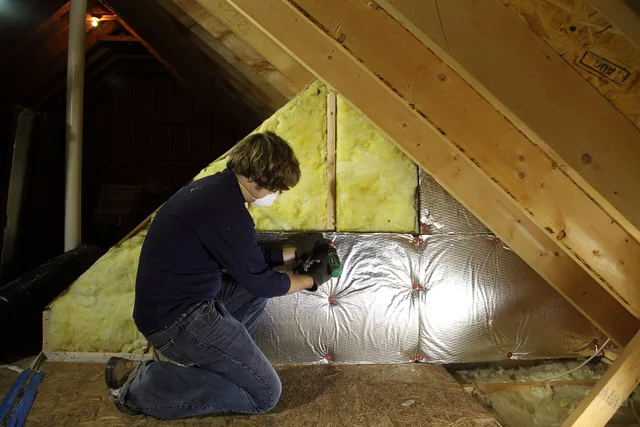
Homeowners regularly pay for insulation and then discover the house still feels drafty and the bills barely moved. The reason is almost always air leakage that was never sealed, now buried under a foot of loose fill.
Air seal before insulation
- Seal top plates and penetrations first
- Then blow in loose fill insulation
- Sealing after insulation means moving it again
- Wrong order leaves drafts and high bills
Air sealing is cheap, fast and unglamorous. It also has to happen first, because sealing top plates and penetrations after insulation means moving the insulation again. The regret is not the material. It is the order.
Regret two: density and settlement
Loose fill cellulose settles. Dense pack cellulose in a wall cavity is installed to a specified density precisely so that it will not. Under-packed cavities settle over a few winters and leave an uninsulated strip at the top of the wall, which is exactly where warm air collects.
Dense pack vs under-packed
Dense pack
- Installed density
- Specified
- Settlement
- None
- Top of wall
- Insulated
- Verification
- Bag count
Under-packed
- Installed density
- Below spec
- Settlement
- Over winters
- Top of wall
- Uninsulated strip
- Verification
- Impossible later
Ask for the installed density or the bag count against the calculated volume. That number is checkable at the time and impossible to verify later without opening the wall.
Regret three: moisture in the assembly
| Symptom | Likely cause |
|---|---|
| Damp patches on upper walls after insulating | Warm moist air reaching a cold surface |
| Musty smell from a crawl space after work | Ground moisture with reduced air movement |
| Staining on the roof deck | Bathroom fan venting into the attic |
| Compressed, discolored batts | Water tracking through the cavity |
Insulation does not cause moisture. It changes where surfaces sit relative to the dew point, which turns an existing moisture supply into visible condensation. EPA's overview of what mold is and what it needs to grow makes the dependency plain: moisture control is mold control, and materials that stay wet grow mold regardless of what they are made of.
Natural fiber insulation handles moderate humidity swings better than many alternatives, but no insulation survives a live leak or a fan venting into an attic.
Regret four: pests and detailing
Cellulose, wool, hemp and wood fiber are all treated for fire and pest resistance, but detailing still matters. Open soffits, unscreened vents and gaps at the eaves let rodents and insects into a warm cavity. The regret is rarely the material choice and almost always a missing screen or an unsealed penetration.
Regret five: no ventilation added back
A tightened house with no added ventilation collects moisture and everything else the occupants produce. Householders describe windows streaming with condensation, stale air in the mornings, and worse symptoms for anyone with a respiratory condition.
CDC's summary of what asthma is and what triggers it lists indoor triggers such as mold and dust mites, both of which thrive when humidity rises and stays high. The fix is mechanical ventilation sized for the house, plus working extraction in kitchens and bathrooms, specified as part of the insulation job rather than added later.
The full sequence is set out in our guide to what happens at each stage, and where thickness is limited, the priorities in small-space insulation options apply instead.