Features
Part of Which sustainable home renovation style is worth studying before you start?
4 things nobody tells you about sustainable home projects
Which home projects pay off where: attics in cooling climates, basements in radon country, crawl spaces in the humid South and envelopes in the cold North.
What to take away
- The best first project differs by region, and copying someone else's priority list wastes money.
- Cooling-dominated regions get more from attic and shading work than from wall insulation.
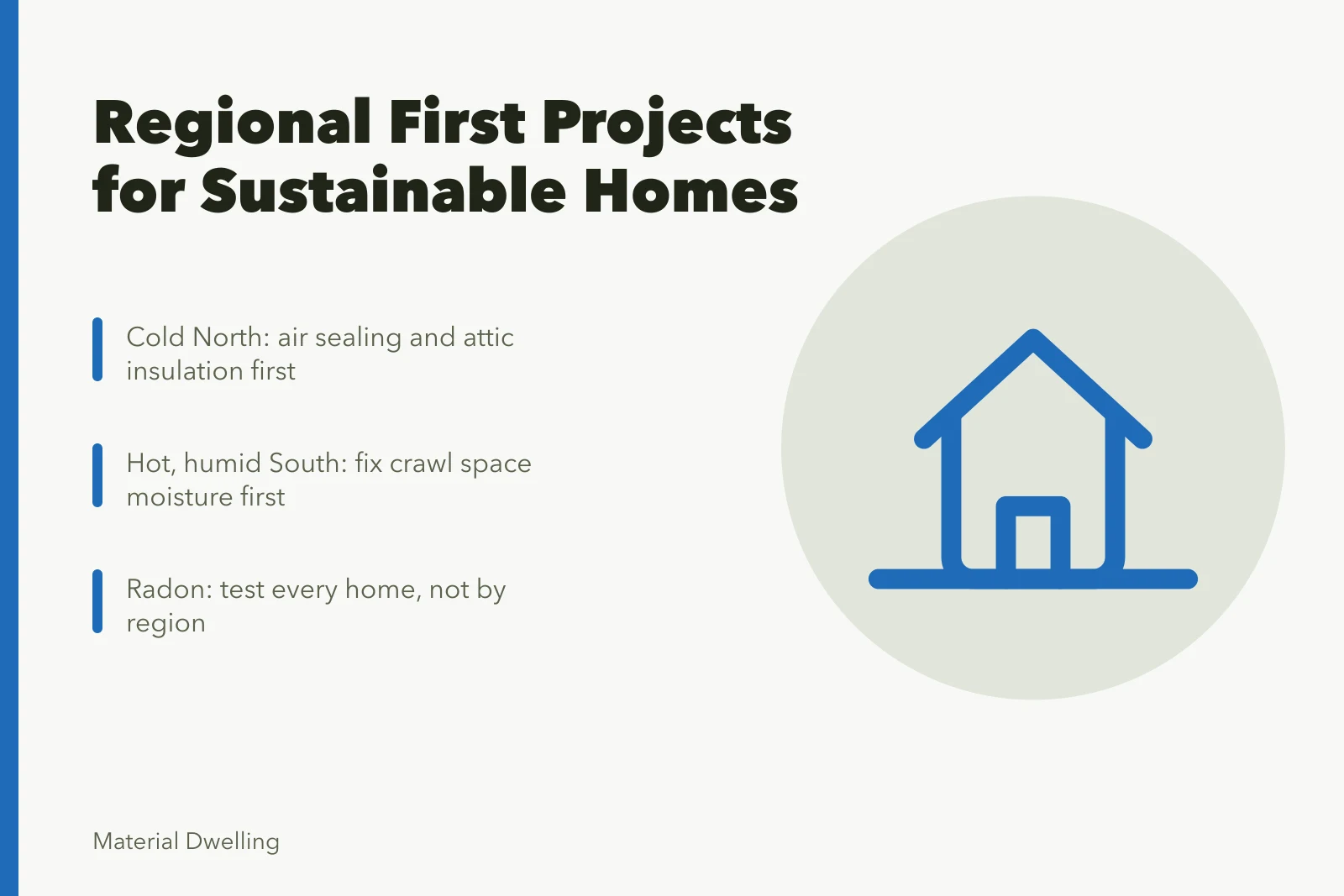
- Humid regions should fix the crawl space before touching anything upstairs.
- Radon is a testing question everywhere, not a regional one, whatever a zone map suggests.
The best first project by region
Usual first project
- Cold, long heating season
- Air sealing and attic insulation
- Hot, cooling dominated
- Attic insulation, radiant barrier, shading
- Hot and humid
- Crawl space and moisture control
- Marine and coastal
- Envelope drainage and corrosion detailing
- Arid
- Shading, thermal mass, air sealing
Why
- Cold, long heating season
- Largest heat loss, best comfort return
- Hot, cooling dominated
- Attic heat drives cooling load
- Hot and humid
- Moisture is the limiting problem
- Marine and coastal
- Salt and sustained damp
- Arid
- Large daily temperature swing
The pattern that surprises people: in cooling-dominated regions, attic work usually beats wall insulation, because the attic gets far hotter than the walls and the ducts frequently run through it. Attic-first thinking also shapes which natural insulation upgrades add everyday value, since duct location decides where the money goes.
First project by region
Cold climate
- First project
- Air sealing, attic
- Why
- Largest heat loss
- Beats
- Wall insulation
Hot cooling
- First project
- Attic, radiant barrier
- Why
- Attic heat load
- Beats
- Wall insulation
Hot humid
- First project
- Crawl space moisture
- Why
- Moisture limits
- Beats
- Upstairs finishes
Heat is the constraint in cooling climates
In much of the South and Southwest, the binding constraint on a home project is summer heat rather than winter cold. That changes which upgrades matter and when work can be scheduled, since crews cannot safely work in an unconditioned attic during the hottest hours.
The National Weather Service publishes heat forecast tools including the heat index, which combines temperature and humidity into a measure of how hot conditions actually feel. For project planning, the practical use is scheduling: attic and roof work happens early in the day, or in a different season.
Humid regions start underneath
In the humid Southeast, the crawl space is usually the source of problems upstairs. Ground moisture evaporates into the space, moves up through the floor, and shows as cupped boards, musty odor and high indoor humidity.
Fixing that comes before insulation, before flooring, and before finishes. A vapor barrier over the ground, corrected drainage, sealed vents where the design calls for it, and dehumidification will do more for the house than any material choice made above it. A seasonal routine for crawl space checks keeps that ground moisture from returning after the work is done.
The tell is seasonal. Floors that feel fine in February and cup in August, doors that stick only in summer, and a smell that arrives with the humidity all point downward rather than at the material itself. Put a hygrometer in the crawl space for a year before spending anything upstairs.
Radon is not a regional decision
Radon is not a concern for certain states. The evidence says otherwise. EPA's summary of the health risk of radon states radon is the second leading cause of lung cancer overall.
It is the number one cause among people who have never smoked, and it accounts for roughly 21,000 lung cancer deaths a year in the United States.
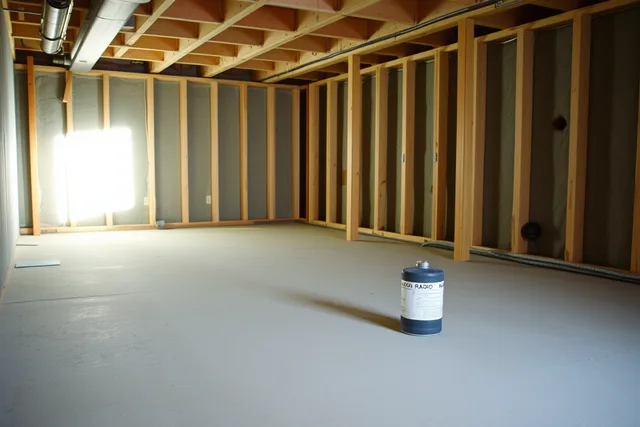
The practical instruction is the same everywhere: test the house, and act on the result rather than on the map. Any project that finishes a basement or seals an envelope is a good moment to have a current result in hand.
The physical mechanisms behind these regional differences are set out in how climate changes material choices, and the way regional assumptions get smuggled into national advice is covered in regional differences in material selection.