Maintenance
Part of Which sustainable home renovation style is worth studying before you start?
Care and upkeep: a seasonal routine for sustainable home projects
Upkeep after a sustainable renovation: a seasonal routine, why maintenance beats replacement, and the entryway habits that keep outdoor soil outdoors.
What to take away
- Maintenance is what makes a sustainable choice sustainable. Materials replaced early undo the argument.
- Preservation practice is built on the same idearoutine upkeep prevents the repairs that cost real money.
- Water management outside the house protects the materials inside it.
- Around older painted buildings, soil at the drip line deserves attention, and the entryway is where it gets tracked in.
Maintenance is the whole argument
A material chosen for durability only delivers durability if it is maintained. A hardwood floor refinished on schedule lasts a lifetime. The same floor left until the wood is bare needs replacing.
This is not a modern insight, and preservation practice is organized around it, and the National Park Service brief on preserving historic barns makes the case in a building type where neglect is visibly fatal.
Keep water out, maintain roof and drainage, and repair small failures before they turn structural. The domestic version is identical at a smaller scale.
A seasonal routine
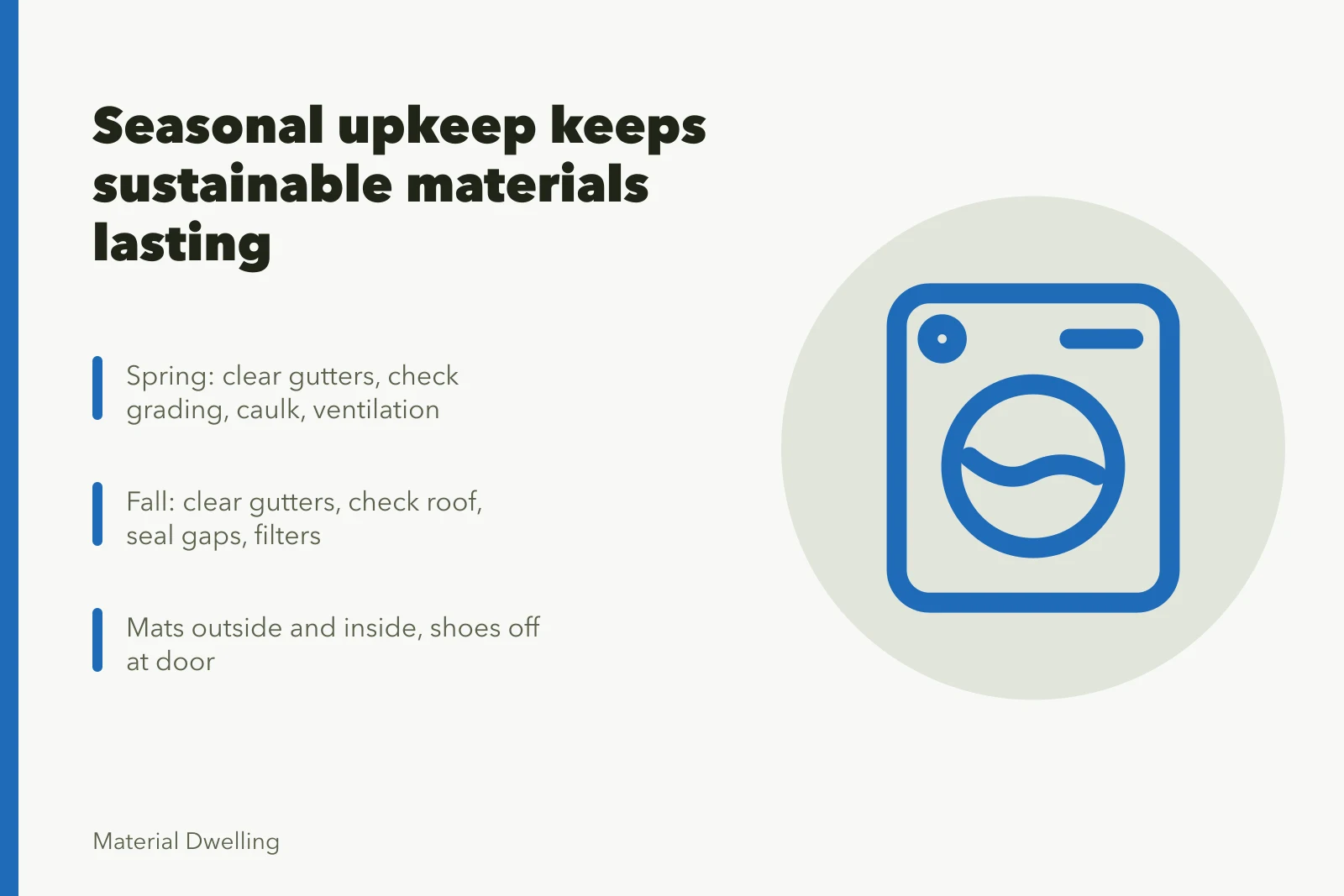
- Spring. Clear gutters and downspouts, check that ground slopes away from the foundation, inspect exterior paint and caulk, service ventilation equipment.
- Summer. Check crawl space and basement humidity, run dehumidification where needed, inspect for insect activity in timber.
- Fall. Clear gutters again, check roof and flashing, seal gaps before heating season, replace filters.
- Winter. Watch for condensation on cold surfaces, check for ice damming, monitor indoor humidity as heating dries the house.
Two of those repeat because gutters matter twice a year and because most water damage inside a house begins with water mismanaged outside it.
Seasonal home maintenance routine
- SpringClear gutters, check grading, paint, ventilation
- SummerCheck humidity, dehumidify, inspect timber insects
- FallClear gutters, roof, seal gaps, filters
- WinterWatch condensation, ice damming, indoor humidity
Keep outdoor soil outdoors
Around older buildings that were painted before 1978, the soil near the walls can carry lead from decades of exterior paint weathering and past renovation. EPA's overview of lead in soil and where it comes from covers the sources, including deteriorating exterior paint, and the practical steps for reducing exposure.
The upkeep response is mundane and effective. Put a mat outside and inside every entry, take shoes off at the door, plant or mulch bare soil near walls to keep dust down, and wash children's hands after outdoor play. Those habits keep grit off the floors you paid for, so material and health benefits point the same way.
Interior material choices decide how much grit the finishes can take before they need repair.
An annual walk
| Area | What to check | Why |
|---|---|---|
| Roof and gutters | Blockages, damaged flashing | Most interior water starts here |
| Foundation and grading | Slope, cracks, pooling | Basement moisture |
| Exterior paint and caulk | Failure at joints and sills | Water entry, dust generation |
| Crawl space | Standing water, vapor barrier | Floor and air quality above |
| Ventilation equipment | Filters, fan operation, ducting | Moisture and air exchange |
| Entry points | Mats, thresholds, drainage | Grit and soil tracked indoors |
Do this once a year, in the same month, and photograph what you find. Comparison is the diagnostic.
The condition survey approach behind this is set out in the year two maintenance plan for materials, and the project types that generate this upkeep are covered in our review of five projects worth studying.